Headphone manufacturers love slapping specs on the table like poker chips. "50mm driver!" screams the marketing department, and the consumer nods along, convinced. Bigger number is better, right? Not necessarily.
What even is a driver?
A driver is the small speaker element inside your headphone that converts an electrical signal into sound. It's a round diaphragm – or more precisely a diaphragm, magnet, and voice coil – that vibrates and pushes air towards your ear canal. Basically the same thing as a subwoofer in your car, just smaller.
Driver size is expressed as diameter in millimetres. In-ear headphones typically have 6–12 mm drivers, over-ear headphones 30–50 mm. A bigger diaphragm moves more air, which in theory means better bass reproduction and more dynamic sound.
In theory. In practice, it's a bit more complicated.
Why bigger isn't automatically better
Think of it this way: a Ferrari 812 Superfast and your neighbour's rusty van both run on V12 engines. Big engine in both. Yet only one of them is something Henri would want to drive (though he's got an Alfa Romeo, which doesn't run on any engine).
Driver size is just one variable in the equation. Here are a few things that matter at least as much:
- Driver tuning – How the diaphragm, magnet, and voice coil are designed to work together. A poorly tuned 50mm driver loses to a well-tuned 40mm one, no contest.
- Enclosure – The space around the driver affects how sound behaves. A wrong-sized chamber will ruin even a great element.
- Frequency response tuning – How different frequencies are reproduced relative to each other. This is where an audio nerd like Jasse works his magic. He sits in the studio listening to the same track hundreds of times until the frequency response is spot on. His ears are insured, so trust us – he knows what he's doing.
- Materials – The diaphragm material (biocellulose, titanium, PET plastic) affects how quickly and accurately it responds to the signal.
In short: the driver is an important component, but without proper tuning and overall design, it's just a number on a spec sheet.
What about Valco headphones?
We don't market driver size as our main selling point, because that would be misleading. Yes, our over-ear headphones have 40mm drivers. A competitor might advertise a 50mm driver. But when Jasse has tuned our 40mm drivers to perfection, the end result is better than the competitor's bigger element that was tuned by some algorithm in an office.
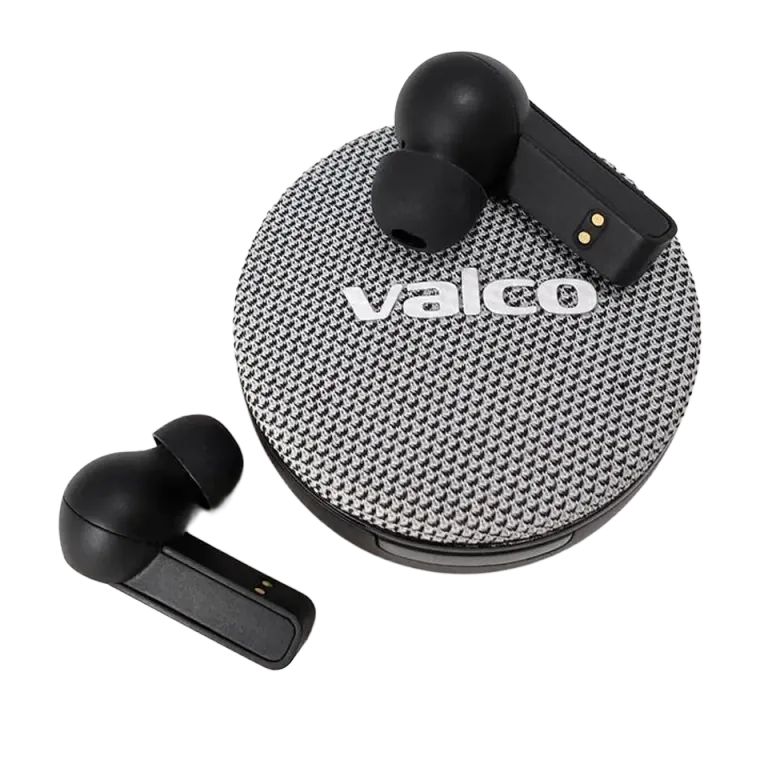
In our in-ears – like the NL25 – the driver is naturally smaller, but the tuning is done with the same precision. A small element properly tuned beats a big element poorly tuned. Every time.
It's a bit like cooking. Expensive ingredients won't save you if the chef doesn't know what they're doing. And you can make amazing food with cheap ingredients if you know your stuff.
What specs should you actually look at?
If you want to compare headphones on paper, pay attention to these:
- Frequency response – A wide frequency response (e.g. 20 Hz – 20 kHz) is a good starting point, but even that doesn't tell the whole story without a frequency response graph.
- Impedance and sensitivity – These tell you how easily the headphones will get loud enough. Low impedance and high sensitivity mean your phone can drive them without breaking a sweat.
- Your own ears – The best spec is how the headphones sound in your ears. You can't listen to music on paper.
So don't buy headphones based on driver size. Buy the ones that sound good. And if you want to support a small Finnish company's Death Star project while you're at it, well – you know where to find us.