So you're about to board a plane and wondering whether you can bring your headphones or if you'll be stuck listening to your seatmate's life story for the next four hours. Good news: Bluetooth headphones are allowed during flights on practically every airline. Bad news: your seatmate will still tell their story, but you don't have to listen.
Bluetooth and airplane mode – how does it work?
Airplane mode means your phone stops transmitting a cellular signal. Bluetooth is a different thing entirely. Nearly every airline allows Bluetooth during the flight – including takeoff and landing. Finnair, SAS, Lufthansa, Norwegian, Ryanair... all of them allow it.
In practice: switch your phone to airplane mode and turn Bluetooth back on. It works. Your phone won't explode, the plane won't fall out of the sky, and the captain won't come over to personally tell you off.
If you're the extra-diligent type, check your airline's rules before the flight. But we haven't come across a single airline that bans Bluetooth yet.
ANC on a plane – this is where it shines
Active noise cancellation was literally invented for airplanes. We mean literally literally – the first ANC headphones were developed for pilots.
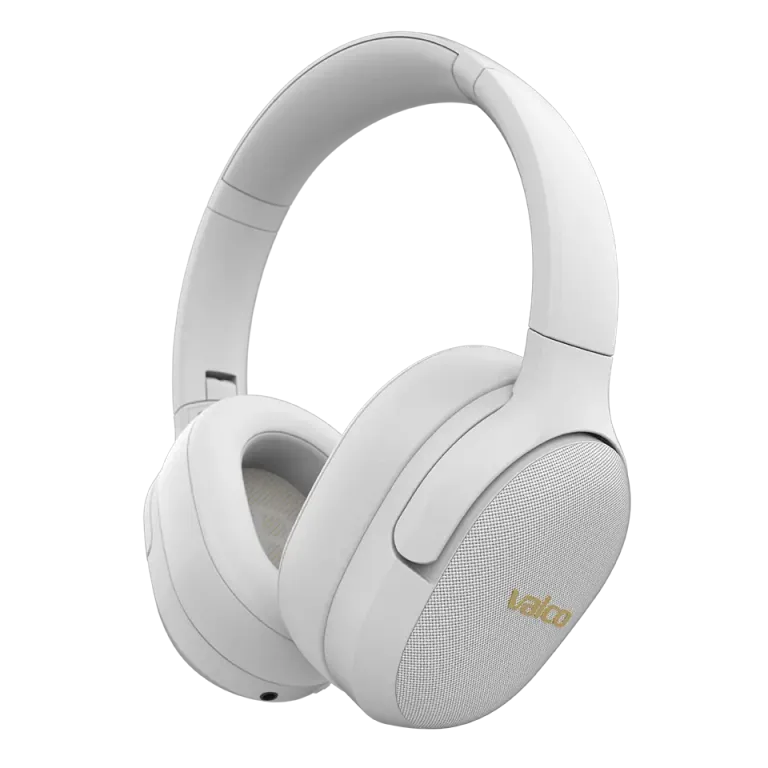
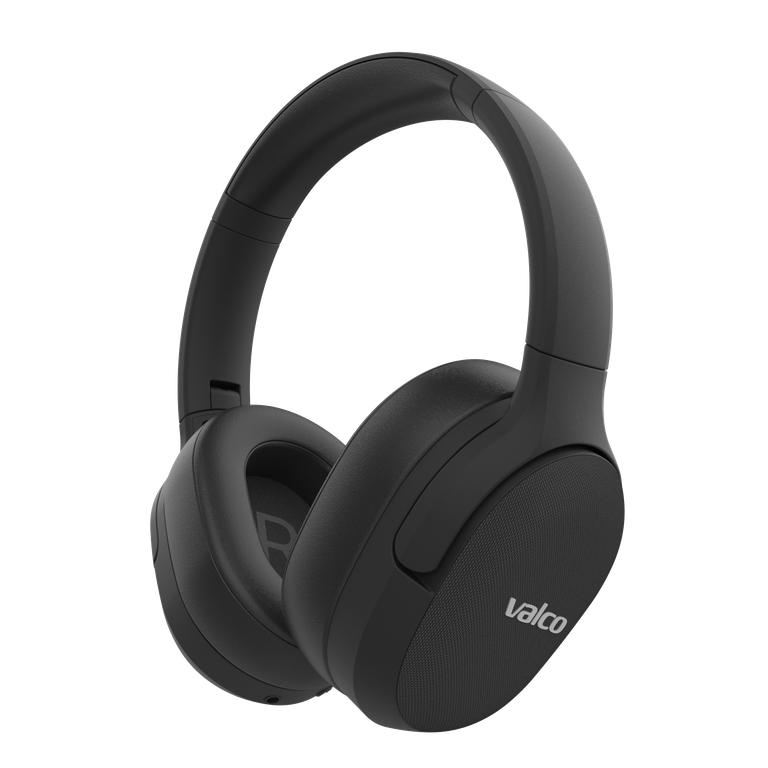
The steady hum of aircraft engines is exactly the kind of low-frequency noise that active noise cancellation eliminates best. VMK25 and VMK25.2 do this extremely well. Jasse's tuned hybrid ANC eats that low rumble alive, and what's left is basically peace and quiet.
What ANC won't do: it won't remove a baby crying, the gossip from the next seat, or the clatter of the drinks trolley. Those are high-frequency sounds, and you'll need music to help with those. Put something on at a reasonable volume and the world disappears.
NL25 earbuds work on flights too. The ANC is smaller than on an over-ear model – we haven't overturned the laws of physics just yet – but they win on travel size. They fit in your pocket, no need to pack a separate pouch in your bag.
Which ones for the flight – VMK25 or NL25?
Depends on what kind of traveller you are.
- VMK25 / VMK25.2 is the better pick for long-haul flights. ANC is more powerful, sound quality is better, and 50–55 hours of battery life means you can fly from Finland to Australia and back without charging. They also come with a 3.5mm AUX cable so you can plug into the plane's entertainment system. That's the little hole in the armrest.
- NL25 is the better pick for short flights and travellers who don't want to lug big headphones around. 4.5 hours of battery with ANC is enough for flights within Europe. Wireless charging in the case is handy if there's a charging spot at the airport.
If you fly a lot and fly far, grab the VMK25.2. If you fly once a year to the Canary Islands, the NL25 will get the job done.
Who should pick something else?
If ANC is absolutely mission-critical for you and you want every last decibel gone, the Sony WH-1000XM5 or Bose QuietComfort Ultra are a hair ahead in pure noise cancellation performance. We'll admit that. They also cost twice as much.
If your headphones break on a flight or at a hotel, with Sony and Bose you're out of luck. Our headphones get repaired in Kajaani. Jasse and the rest of the service team will sort them out. Big-brand headphones fly into the bin and you buy new ones.
We also have an edge in model numbers. VMK25 is easy to remember. WH-1000XM5? Sounds like a password your IT department forces you to change every quarter.
Summary
- Bluetooth works on planes. Airplane mode on, Bluetooth on, done.
- ANC is at its best on a flight. Engine hum vanishes.
- VMK25/VMK25.2 for long flights, NL25 for short ones.
- Bring an AUX cable if you want to use the plane's entertainment system.
- For high-frequency noise, put some music on.
Henri himself drives his Alfa Romeo everywhere because he thinks security checks are too slow. The car usually breaks down before reaching the airport though, so maybe pack the headphones anyway. Every purchase funds our Death Star – and Henri's next tow truck bill.