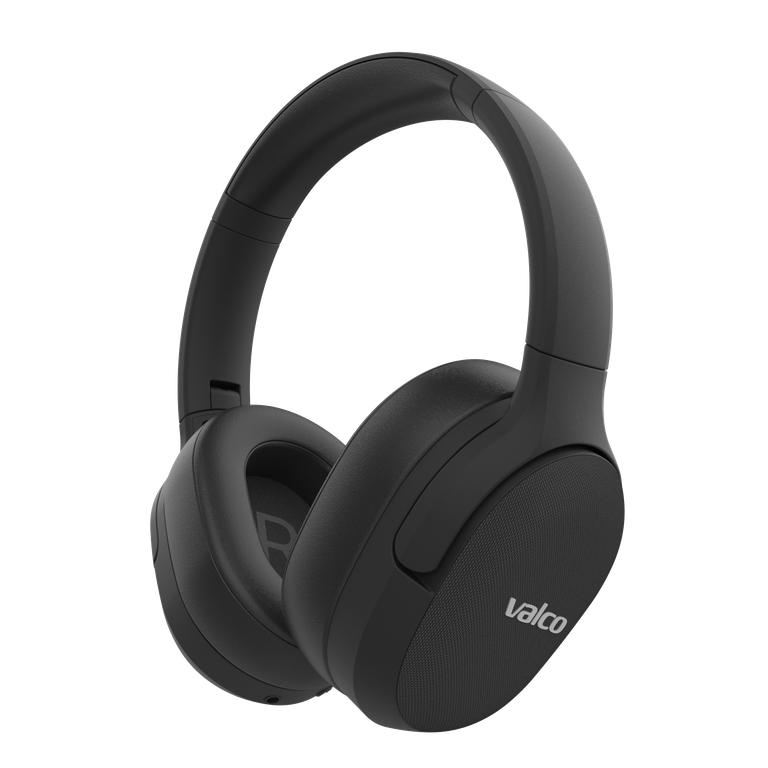
Testing headphones sounds simple. Stick some music on, nod your head, and go "yeah, sounds good". That's not how it works. Well okay, we do get to that part eventually – but only after a long process.
First, we measure
Every Valco headphone goes through the test bench. Frequency response, impedance, sensitivity, phase, harmonic distortion – all the numbers a normal person never wants to understand. But they all need to be spot on before anyone listens to anything.
Measurements tell us whether a headphone is technically in spec. They don't tell us whether it sounds good. And there's the problem. The frequency response can look perfect on paper, but the headphone still sounds like the singer is inside a bucket. That's why measurements alone aren't enough.
Then we listen
Jasse Kesti is Valco's sound designer. His ears are insured – we won't tell you the amount, but let's just say you could buy a few used Alfa Romeos with that money (which would break down within a week, like Henri's car).
Jasse's job is to listen to every production batch and compare it to the reference. He listens to the same tracks over and over, at different volumes, across different genres. Classical, metal, podcasts, ASMR – everything real people actually listen to. If something's off, it goes back to the test bench to figure out where the deviation is coming from.
This is the stage where the big brands cut corners. An algorithm tweaks the EQ curve to "good enough" and a million units roll off the assembly line. We have a human listening. It's slower and more expensive, but you can hear the difference.
What about mechanical durability?
A headphone can sound like the best thing in the world, but if the headband snaps in half after three months, it's useless. That's why we also test physical durability.
Headbands get bent. Hinges get opened and closed thousands of times. Cushions get exposed to moisture and heat. The Nordell speakers' splash and water resistance gets tested so thoroughly that the test room is starting to look like a small water park. Even urine resistance has been verifiably tested (video evidence).
For the VMK series headphones, we separately test noise cancellation performance in different environments – office noise, airplane hum, public transport. ANC needs to work where people actually use their headphones, not in the silence of a lab.
Why does this matter?
A small company can't hide behind a brand. If we sell rubbish, it shows immediately. There's no billion-dollar marketing budget to bury bad reviews. Every headphone that leaves our hands is a business card.
That's why we test more than we'd have to. And that's why we have our own repair service in Kajaani – because no matter how well we test, electronics are electronics. Sometimes things break. When they do, we fix them instead of chucking them in the bin.
Every purchase funds not only better testing, but also our Death Star. It's currently about 0.4% complete. Thank you for your patience.