Bluetooth codecs are one of those topics internet audio nerds argue about with the same fury as vinyl vs digital. The truth is a bit more boring than either side wants to admit.
Here's the explanation without needing an engineering degree.
What do codecs actually do?
Bluetooth can't transmit raw audio, there's too much data and not enough bandwidth. So the sound gets compressed by a codec before it's sent, then decompressed back in the headphones. The more data a codec can push, the less the sound quality suffers from compression.
Basic Bluetooth uses the SBC codec, which is kind of like MP3 in 2003: it works, but better options exist. LDAC and aptX HD are both so-called Hi-Res codecs that push considerably more data.
LDAC, Sony's data pump
LDAC is a codec developed by Sony that transfers up to 990 kbps. That's roughly triple what SBC manages. Superior on paper.
In practice, LDAC runs in three different modes:
- 990 kbps – best quality, but needs a solid connection
- 660 kbps – balanced mode
- 330 kbps – most stable connection, but quality drops close to SBC level
The problem is that LDAC switches modes automatically depending on your surroundings. On a crowded train or out in the city, the codec might drop to the lowest tier, making the whole Hi-Res thing mostly theoretical. A bit like Henri's Alfa Romeo: gorgeous on paper, parked at the shop in reality.
aptX HD, Qualcomm's alternative
aptX HD transfers 576 kbps. Less than LDAC's maximum, but more than LDAC's economy mode. The key difference is stability: aptX HD stays at the same bitrate and doesn't jump between modes.
aptX HD needs a Qualcomm chip in both the phone and the headphones. Android phones usually support it, iPhones support neither of these codecs. Apple uses its own AAC codec, because of course it does.
So which one wins?
Honest answer: depends on the situation.
- You're sitting still in a quiet room – LDAC in 990 kbps mode pushes the most data and sounds best on paper
- You're out in the city or on a train – aptX HD is the more stable choice since it won't drop to a worse mode
- You use an iPhone – neither works, so this whole debate is pointless for you
According to Jasse, the difference between LDAC and aptX HD is audible, but it needs good source material and a quiet environment. On a Spotify stream you won't really notice it. If you're listening to FLAC files from your own library, LDAC is the better choice on paper.
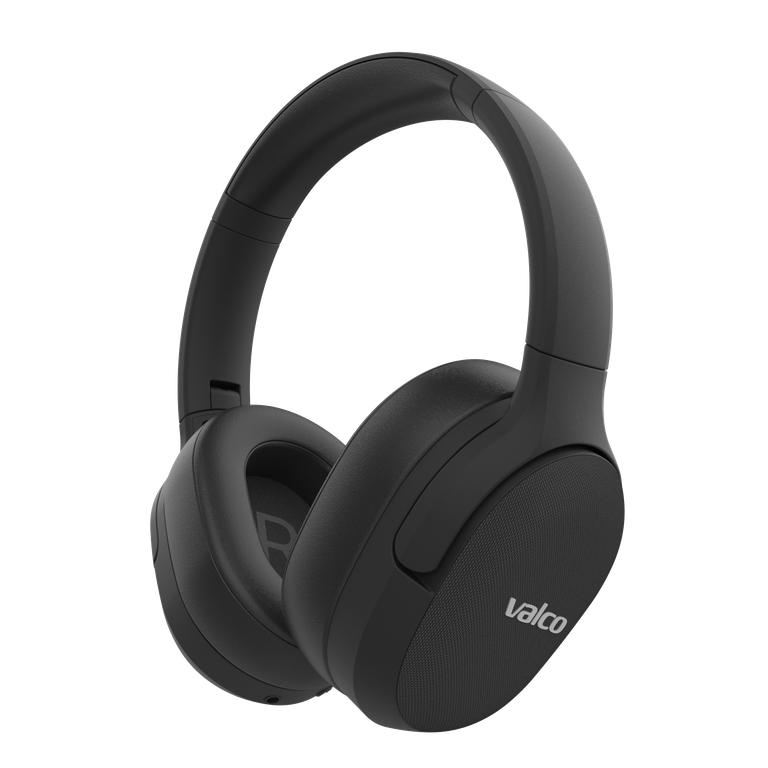
The more important question is how the headphones themselves sound. The world's best codec can't save a bad audio signal. Jasse has tuned Valco headphones to sound good regardless of codec, because good frequency response and driver quality matter more than transfer speed.
Honest bit: Valco models don't support LDAC. The VMK20 and VMK25 use aptX HD, the NL25 uses aptX Adaptive, and the VMK25.2 uses base aptX, which also learns lossless aptX Lossless with a firmware update (via the Valco Updater app, Android for now). In real-world listening the gap to LDAC is smaller than the forums suggest, and aptX HD suffers less from connection dropouts.
And if you want the absolute best sound quality, plug in a cable. Bluetooth is a compromise, a good one, but still a compromise. The VMK25.2 has a 3.5 mm AUX port for exactly this reason.
Every headphone purchase funds our Death Star by about 0.000001 percent. Codec doesn't matter for that part.