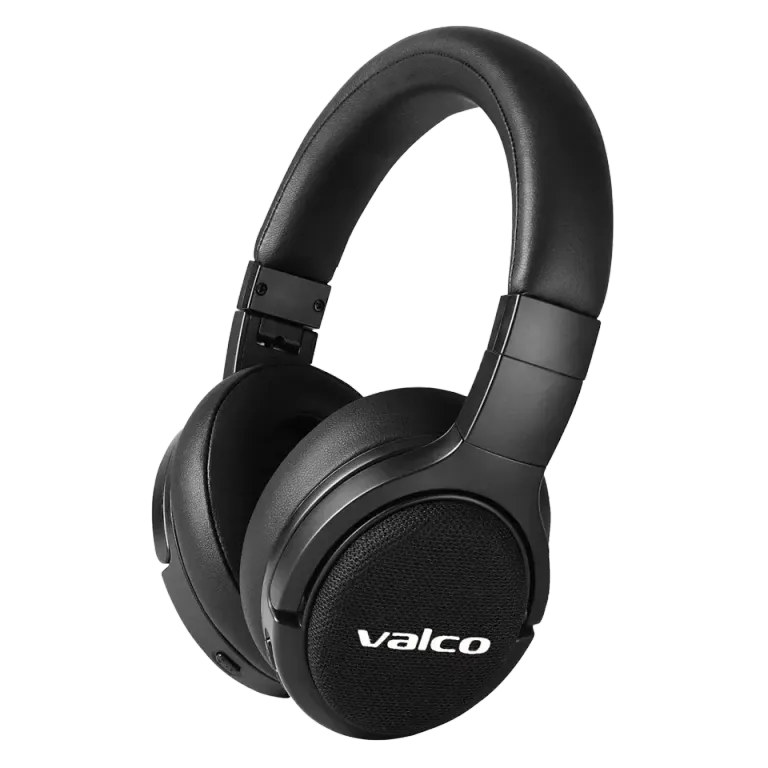
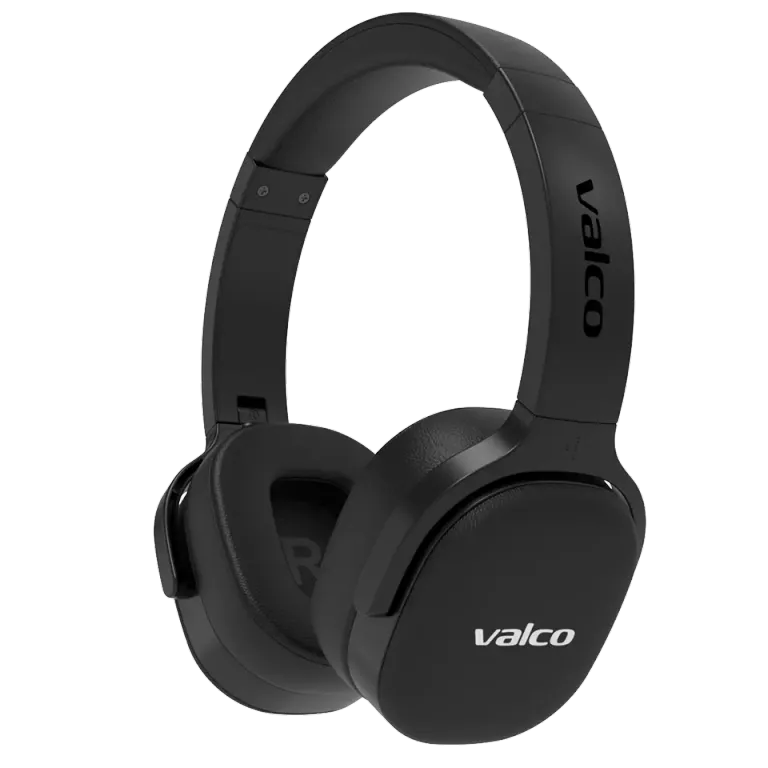
Sony WH-1000XM4 has been on the market long enough to have become a legend. At the same time, Valco VMK20 has quietly gathered a following among people who don't want to pay double for a brand logo. It seems you're one of them now – or at least curious. That's good.
Let's go through how these two actually compare to each other, without marketing fluff.
The core of the comparison
Sound quality is where the VMK20 surprises. Jasse – our sound designer, whose ears are insured because no one else agrees to do that job – has tuned the VMK20's sound so that it competes in the same league with Sony. Qualcomm's QCC30XX chip and a Class AB amplifier do the groundwork; Jasse's ears do the finishing. Sony's XM4 also sounds excellent, but the difference is hard to hear without lab conditions and golden ears.
Noise cancelling (ANC) is Sony's traditional strength. The XM4's ANC is still among the best on the market, even though the model is already old. VMK20's four-microphone ANC does its job well – on a plane the hum disappears, in an open-plan office you get peace – but Sony's algorithm is a shade more polished. That's a fact, not an opinion. If ANC is the one and only thing for you, Sony wins narrowly.
Battery life clearly goes to the VMK20. 45 hours versus Sony's roughly 30 hours. In practice you charge the VMK20 once a week, the Sony more often. It doesn't change the world, but it's nice.
Multipoint is in both. You can keep the headphones connected to a laptop and a phone at the same time. A convenience that works on both.
Price is where this comparison gets interesting. VMK20 costs roughly half of what the Sony XM4 cost when new. These days you can get the XM4 discounted for less, but the VMK20 is still cheaper. With the savings you can buy a few cases of beer or fund 0.000000001% of our Death Star – the choice is yours.
Why Valco?
The VMK20's real advantage isn't a single feature. It's the whole package.
- Repairability. This is the big one. When Sony's pads crumble after two years, you throw them away and buy new headphones. When the VMK20's pads crumble, you twist them off and swap in new ones. When something breaks, Jasse and the boys fix the device in Kajaani. Not in Shenzhen, not in Tokyo. In Kajaani.
- Price. Half the money for the same kind of sound. You can use the rest on whatever you want. Henri would spend it fixing an Alfa Romeo, but you probably have better taste too.
- 24-month warranty. And even after the warranty, the device gets repaired, not binned.
- Fabric covering. Designed by Lauri Lumpeen. Doesn't get sweaty like faux leather in summer. Actually feels comfortable on your head.
- Finnishness. A 14-person company. You know who's responsible. Try calling Sony and asking who tuned your headphones.
Who should choose Sony?
Let's be honest.
- If ANC is absolutely the most important feature for you and you want the best noise cancelling on the market, the Sony XM4 — or even better, the XM5 — is a strong choice. Sony's ANC algorithm is the result of years of development, and you can hear it.
- If you use a lot of Sony's own ecosystem (LDAC codec, Headphones Connect app), you'll stay in Sony's world more seamlessly.
- If the brand matters to you. For some people it does. That's totally okay. We don't judge. Much.
Summary
| | VMK20 | Sony XM4 |
|---|---|---|
| Sound quality | Excellent | Excellent |
| ANC | Good | Slightly better |
| Battery | 45 h | ~30 h |
| Repairability | Yes, in Kajaani | Not really |
| Price | More affordable | More expensive |
| Comfort | Fabric, light 250 g | Faux leather |
| Multipoint | Yes | Yes |
If you want the best possible ANC and don't care about price or repairability, get Sony. If you want practically the same sound quality for half the price from a device that can actually be repaired — VMK20 is the rational choice.
And remember: every VMK20 purchase takes us one step closer to a working Death Star. Henri's Alfa Romeo doesn't get anywhere, but that's a different budget line.