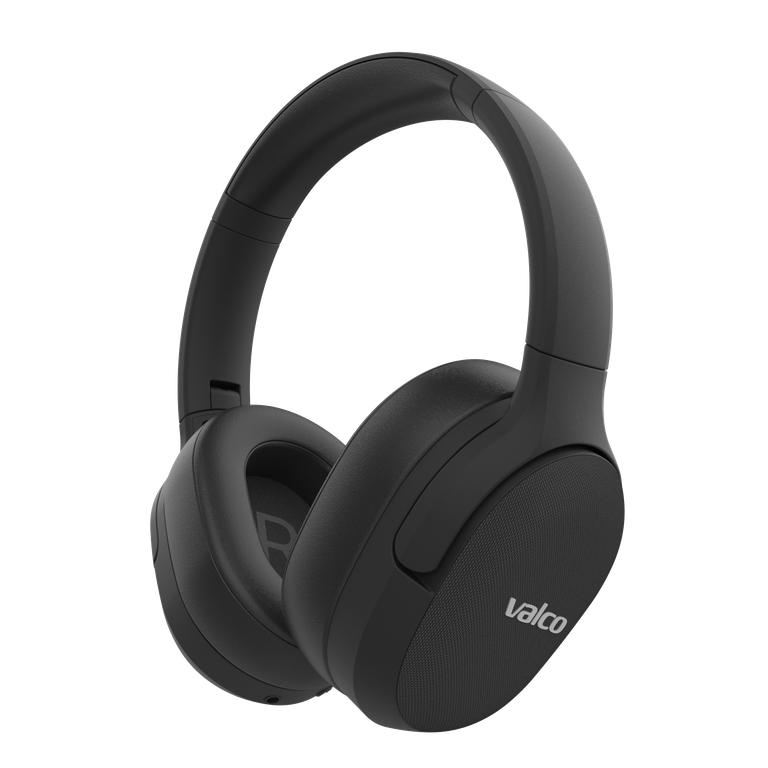
Active noise cancellation – ANC – sounds like someone invented magic and slapped a patent on it. In practice it's physics, but the end result still feels a bit supernatural.
How does ANC actually work?
The principle is simple. There's a microphone on the outside of the headphone that listens to ambient noise. A processor analyses the sound and creates a mirror image of it – an anti-sound that's the exact same waveform but flipped upside down. When the original noise and the anti-sound meet in your ear, they cancel each other out.
In physics, this is called destructive interference. In everyday language, it's called silence.
The whole process happens in milliseconds. The microphone listens, the processor calculates, the speaker plays the anti-sound. Continuously. Thousands of times per second. According to Jasse, it's like hiring an invisible bouncer who stands in your ear canal and turns away unwanted guests.
What ANC cancels – and what it doesn't
This is where we need to be honest, because we're Valco, not some megacorp's marketing department.
ANC works best at low frequencies. Steady, continuous droning – airplane engines, the rumble of a train, the hum of air conditioning – gets wiped out effectively. These sounds are predictable, and the processor can easily calculate the anti-sound for them.
High-pitched and sudden sounds are trickier. A child's shriek, a dog's bark, or your coworker's snort-laugh come so fast that the processor can't react perfectly. ANC does dampen them to some extent, but not completely.
In practice: ANC + music on = a pretty silent world. ANC without music = noticeably quieter, but you're not living in a vacuum.
Passive vs. active noise cancellation
ANC isn't the only way to block noise. The physical structure of the headphone alone – the cushions around your ears – isolates sound. This is called passive isolation, and it's basically the same thing as sticking your fingers in your ears. Less stylish, but it works.
In good headphones, these two work together. Passive isolation does the groundwork and ANC finishes the job. In over-ear headphones like the VMK25.2, passive isolation is naturally better than in earbuds, because the ear cup surrounds your entire ear. With the NL25 earbuds, the fit of the ear tip in your ear canal makes a huge difference – a bad fit means bad ANC, no matter how good the electronics are.
Why isn't all ANC the same?
Because the processor and algorithms are what matter. The number of microphones, their placement, and the quality of the software all affect how accurately the anti-sound hits its mark. In the cheapest headphones, ANC might create a pressure sensation in your ears or weird hissing. Well-implemented ANC just feels like someone turned down the world's volume knob.
Jasse has tuned Valco's ANC algorithms so that the cancellation is effective but sounds natural. No pressure, no sickly-sweet hiss. His ears are insured, so they literally have monetary value.
Big brands throw millions in research and marketing money at ANC. We use Jasse's ears and common sense. The money goes towards building the Death Star, as it should.